
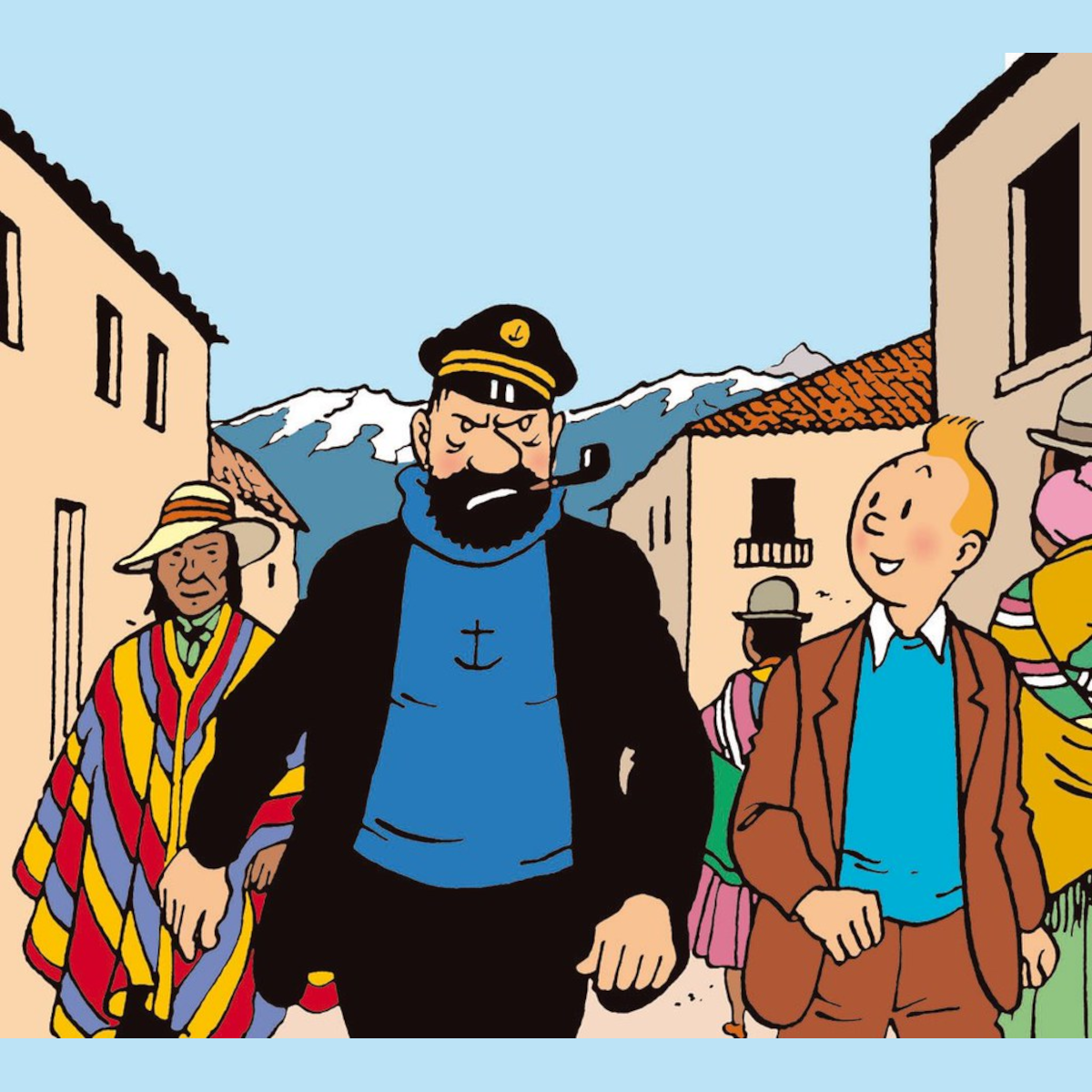


Recently, I came across a comic panel featuring Captain Haddock, which happened to be in French. Here I’ve translated the content:
85% of sailors know how to swim. It is a big advantage over the air force. None of them know how to fly!
Hahaha! That’s typical Captain Haddock!
Captain Haddock – an introduction
If you are not familiar with this character, Captain Haddock is a central figure in the Belgian comic series “The Adventures of Tintin,” created by Hergé.
Captain Archibald Haddock is a gruff, but kind-hearted sea captain with a robust build. He has a rugged face, sporting a thick black beard and moustache. His attire typically includes a blue sailor’s sweater adorned with an anchor emblem, a black captain’s cap and dark trousers. He often accompanies Tintin on his adventurous quests around the globe.
Captain Haddock’s tendency to swear is both a humorous and defining trait of his character. He is known for his colourful and inventive curses, which include phrases like “Blistering barnacles!” and “Thundering typhoons!”. My favourite was “Billions of bilious blue blistering barnacles.” In the original french version, it was “Mille millions de mille sabords de tonnerre de Brest !” I do prefer the English one thanks to its stronger alliteration.
As an aside, an alliteration is the occurrence of the same letter or sound at the beginning of adjacent or closely connected words. It is a literary device usually used in poetry for effect. However, through Captain Haddock, it has been used effectively to evoke humour. That is the skills of both the author and the translator!
What do you think about “Ectoplasm” as an expletive or an insult? Ectoplasm refers to a substance or spiritual energy that is said to be exuded by mediums during a trance. Is he mocking the person being insulted by likening them to something otherworldly?
“Troglodyte” is another of my favourites. With the use of the term, “troglodyte”, referring to a cave-dweller, he humorously insults them by suggesting that they are primitive, uncultured, or socially backward.
How do expressions like “Bashi-bazouks”, “Sea gherkins”, “Cercopithecus”, “Pithecanthropus”, “Iconoclasts”, “Vegetarian”, “Miserable slugs”, “Jellyfish”, “Baboons”, “Nincompoops” sound as insults? What are the insulting suggestions behind these words?
A vegetarian myself, advocating against the recent trend of excessive use of Paneer in Indian vegetarian cuisine, I’m amused to see “Vegetarian” in this list. I wonder what Captain Haddock had in his mind to use it as an insult!
Photo Courtesy: “El Capitán Haddock busca al profesor Tornasol en Perú” by Emilio Quintana Pareja is licensed under CC BY-NC-SA 2.0.

