


Do you enjoy challenges? I do. Puzzles? A loud yes. Captchas? Hmm… they are like puzzles, but let’s just say, not so much. Who really likes captchas? Who even invented these, and why did they think it was a good idea to frustrate us all?
Just last week, I was trying to update an important document on an official website. I filled out a long form, and just as I hit “Submit,” a captcha with jumbled letters and numbers stared back at me. Okay, I thought, no big deal—I typed it in and hit submit again, only to be greeted by another captcha. And then another! On this site, I couldn’t even refresh the captcha image, no matter how hard I clicked. Three mind-bending captchas later, I finally received the ultimate message: “Sorry.” Familiar?

Captchas: What, Why, and…Why!?
Captchas first appeared early this century to help websites tell humans apart from bots. You see, back then, AI wasn’t as sharp; it couldn’t easily pick out a traffic light in a picture or decode a scrambled word. Humans were supposedly better at this sort of thing. And why did we need this? Because those nerdy hackers made bots that could spam, register endlessly, and overwhelm websites just for fun—or to crash servers.

At first, captchas were a brilliant security tool. But then, they evolved into something much more sinister. The text started warping beyond recognition. Scribbles in the background blurred with letters; some letters started touching or overlapping, inviting multiple creative interpretations! Is that a ‘p’ or a ‘P’? A ‘v’ or a ‘V’? It became a guessing game, and suddenly, I was gambling on my humanity.
And as if that wasn’t enough, captchas decided to test our math skills with simple problems like 5 + 2 = ? Now, I know 5 + 2 = 8, but if it gets tougher beyond that, mistakes happen. I am human, and so I’ve been known to make “careless errors.” It’s part of my humanness, really.
Then Came Image Captchas
As though the torture with text wasn’t enough, someone had a bright idea: image captchas. This should make things easier, right? Think again. Now, the questions in our minds were becoming progressively harder ending with existential and identity questions like:
- Is that tiny bit of tyre peeking out part of the bicycle…or just part of my imagination?
- Should the part be considered as a part of the whole or is the part different from the whole?
- That man seated on the bicycle is hiding the boundary of the seat. Is he part of the bicycle? Should I choose the square with him?
- Excuse me, what are crosswalks? Do you mean pedestrian crossings?
- Where are the taxis here? I see just yellow cars?
- What are fire hydrants?
- Am I human? 😔
What’s considered “simple” in one culture can be absurdly complex for another, and captchas are the ultimate example of this. “Pick all the crosswalks” assumes everyone knows what a crosswalk even looks like! In some places, crosswalks are just a suggestion, not a formal white grid. And those fire hydrants—they’re a staple of American sidewalks, but practically a mystery in places where you’d be hard-pressed to spot one in real life.
What is being human?
At this point, Captchas started taunting us with sly comments like, “You haven’t selected all the stairs. Try to get them all or you are doomed to be labeled a robot.”
If Captchas have taught me anything, it’s that sometimes, proving you’re human requires just enough patience to almost make you feel… robotic.
The real hallmark of humanity is our innate irritation at repetitive nonsense. Let’s face it—robots and AI are mastering captchas left and right, while humans struggle with identifying fire hydrants or deciphering cryptic blobs of text. But imagine if instead of challenging us to identify “all squares with streetlights,” the test was a series of mind-numbing, repetitive tasks—like clicking “next” on an endless series of blank forms or arranging icons that shuffle back to their original spots every time we’re done.
A human wouldn’t tolerate this for long. Soon enough, we’d crack and start ranting or clicking wildly. That’s when the system would know for certain: this is no bot. This is a real, living, breathing human, frustrated beyond belief by the absurdity of it all. A true Turing test for the modern era!
Finally, I’ll leave you with a tidbit: CAPTCHA is an acronym that stands for “Completely Automated Public Turing test to tell Computers and Humans Apart.” Wait—so a robot is testing if I’m human? The irony is too real.
Do you have a Captcha story? Share it in the comments, please!
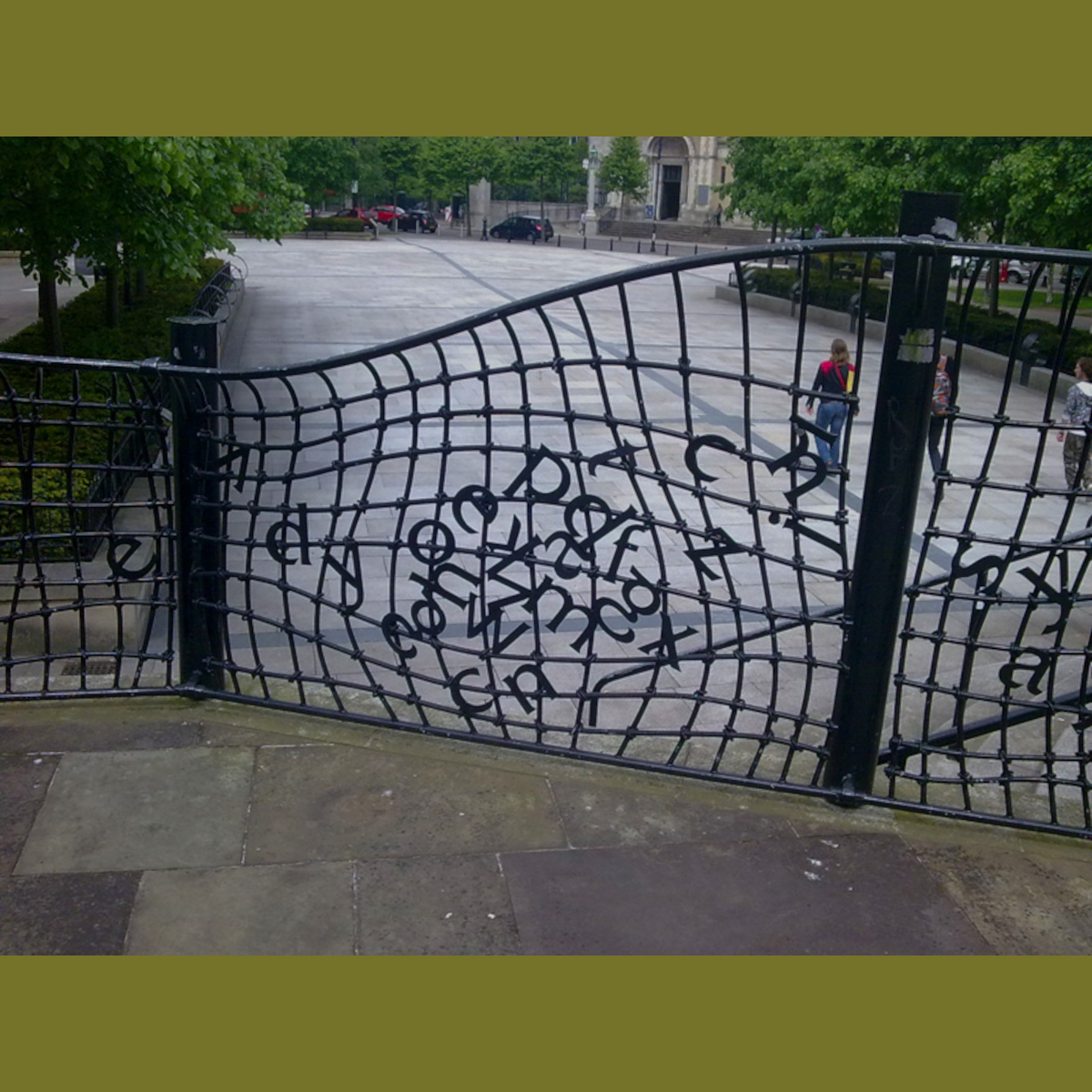
Photo Courtesy: “Captcha fence” by Didier Jansen is licensed under CC BY-NC 2.0.


